Thursday, 31 October 2013

31st of October: First Seal Pup

As viewers of BBC Autumnwatch will already have learned last night, the first Grey Seal pup of this autumn has been born on Blakeney Point. It was found yesterday (30th of October) and here it is:
Photography by Paul Nichols
(who was careful not to disturb the pup)

The story of the first pup was covered in this article in the Eastern Daily press.

Throughout November and December more and more pups will be born. Last winter the total was 1,223. Follow our blog to stay up to date with the pupping period as it progresses.

Last week we saw a tagged bull Grey Seal on the Point, which we reported to the Sea Mammal Research Unit in Scotland. It turns out he was rescued from Newcastle as a juvenile last December and named 'King Tut'. The RSPCA East Winch wildlife centre then released him at Sutton Bridge in Lincolnshire this July.

In other news, Ajay is currently featured on the East of England Conservation blog.

Saturday, 26 October 2013

26th of October: Sick Spoonbill, Swift surprise and "Where is the Wren?"

We have been involved in a couple of bird rescues on the reserve this week. The first was this juvenile Brent Goose found in Stanley's Cockle Bight on Tuesday. It appeared unable to fly and could barely run without falling over. We took it off the Point and sent it to the RSPCA East Winch wildlife centre.

The second rescue was a bit more unexpected. On Wednesday a sick Spoonbill was reported on Morston Marsh. We found it in a creek and picked it up. George then took it to East Winch. The bird was a juvenile, it was clearly in a bad way and felt very thin. It is highly unlikely that this year's juveniles from mainland Europe would have reached Norfolk yet. Therefore this bird was more than likely from the only UK breeding colony, just a few miles west at Holkham, where 18 young fledged this summer. The last one fledged less than two months ago.
George to the rescue (Graham Lubbock)

Unfortunately the Spoonbill had to be put to sleep because it had a fractured shoulder. This was perhaps the result of a collision. We are sad that the bird didn't make it, but at least we did all we could for it.

Although we are well into the second half of October, temperatures have been mild with several sunny intervals. This morning a Painted Lady butterfly was seen in the dunes. There are still a number of plants in flower, adding little specks of bright colour to the sand dunes: yellow Ragwort and Cat's-ears, pink Stork's-bill and white Sea Campion.

Even the 101 year old Yukka is in flower.

On the seal front, we are waiting for them to start moving up into the dunes to give birth. Over the last week, numbers hauled out on the sand at low tide have decreased. This is because many seals are out at sea having one last feed prior to pupping. It's certainly no time to be a fish!

Grey Seal pupping starts in the southwest in late summer and works its way clockwise around the the coast reaching Norfolk in late October. The Farne Islands, up in Northumberland, had their first pup on the 27th of September. We are expecting the first pup to be born on Blakeney Point any day now, so watch this space.

Our October wetland bird count recorded 1,877 Wigeon. Other birds recorded on the Point included a Purple Sandpiper, Short-eared Owl, Red-breasted Merganser, 250 Grey Plovers, 550+ Pink-footed Geese flying east and 18 Common Scoters over the sea. On Tuesday four Shore Larks came in off the sea, the first of this autumn. These splendid-looking birds have yellow faces with striking black markings and tufted feather 'horns', for this reason they are also known as the Horned Lark. Slightly smaller than Skylarks, they breed in Scandinavia and in the arctic tundra, small numbers over-winter here feeding along the strandline and amongst the dunes.

Later that day - the 22nd - we were surprised to see two Swifts so late in the year. On Wednesday we saw another over Blakeney Freshes during a birdwatching session with the Young Rangers, who were also treated to views of Bearded Reedlings in flight above the reeds.
Wigeon on Blakeney Freshes (Graham Lubbock)

On Thursday a Wren decided to spend some time inside the Lifeboat House, happily hopping under chairs, along book shelves and around the kitchen. It spent at least half and hour inside without making a sound, then as soon as it got outside began singing its heart out, perhaps rejoicing in its return to freedom. So to finish with, here is a little game of "Where is the Wren?", which also gives an insight into a Rangers' kitchen...
- Ajay (with photographs by Paul)

Did you know you can like NT Norfolk Coast on Facebook?

Sunday, 20 October 2013

20th of October: Firsts for the Point

On Friday morning we added Glossy Ibis to the Blakeney Point bird list when four flew east and were seen by Paul from the top of the boardwalk. Although there have been several Glossy Ibis sightings in Norfolk over the past few years, this is the first record for the Point.

Another first for the Point was this spider, known as the rabbit hutch spider because it is often found in sheds and outhouses, this one turned up in the Lifeboat House - what does that say about our living conditions?!
Photo by Alex Green of Brancaster Activity Centre


Coincidentally, there appears to be a rabbit living in the garden. Since being wiped out by myxomatosis in the 1990s, rabbits are a rarity on the Point. This one has been seen hopping out of the brambles near the public toilets and feasting on apples that we had put out for the migrant thrushes.

Several Blackbirds, Song Thrushes, Redwings and Fieldfares are still arriving on the Point. Peregrines and Merlins are seen most days. There are also several Goldcrests about. A Purple Sandpiper was seen on Friday, a Yellow-browed Warbler on Saturday and the first Hen Harrier of the autumn this morning. There has also been the occasional Woodcock, we found one on Middle Point that had been freshly killed by a raptor. This gave the opportunity to photograph its tail feathers up close. The bright white tips are on the underside and so only observed when flashed to scare off predators. Woodcock are the only British breeding wader to spend time and breed in dense woodland. Those being seen on the Point recently will be birds fresh in off the sea, ready to spend the winter with us.
On winter evenings, Woodcock can be seen flying over Friary Hills onto Blakeney Freshes to feed. They are largely nocturnal and spend most of the day in dense cover.
 
On Thursday three species of butterfly and a moth were seen on the Point. The moth was an Angle Shades and the butterflies included three Peacocks, a Small Copper and a Comma. Interestingly the only other Comma recorded this year was the first butterfly of the year, on the 13th of April. In a way, that brings things full circle. Like in April, we are once again also putting up fencing. This time not for breeding birds but for pupping Grey Seals. At the moment just the stakes are out, we will add the string and enforce access restrictions when the seals start moving up into the dunes.


Last year the first pup was born on the 27th of October, the year before on the 28th, the year before that the 27th, and the year before that on the 26th. So place your bets now!
Cute pup on the Point a couple of years ago
(Photographed by Graham Lubbock)


Our most recent low tide sea count was conducted on the 17th of October and recorded 902 Greys and 164 Commons.

As we are still in the Lifeboat House while we prepare for the pupping season, the visitor centre and toilets are also still open. They will be open throughout the half term week for visitors walking up the Point.

Whilst carrying out our daily duties, we stumbled upon this fossilised sea-urchin, an echinoid. It is probably around 80 million years old.

Another find was this half gallon green bottle, which has earned itself a permanent place in the Lifeboat House.
- Ajay and Paul

Tuesday, 15 October 2013

14th of October: Strong winds and a big bang

The last week brought some memorable moments to Blakeney Point. Wednesday night and all through Thursday, there were strong northerly winds and stormy conditions. There were waves reaching 4 metres and the tide was pushed high up the beach. A lot of seawater gathered east of the Lifeboat House, deep enough for a Cormorant to dive in.
Views from the look-out tower
  
There was noticeable erosion to the sand dunes on Far Point and the sea over-topped the shingle ridge at the Cley end. This demonstrated what a dynamic coastline this is, changing dramatically in a matter of minutes.

The winds then turned easterly, bringing an arrival of of birds from Scandinavia and Russia. Dozens of Robins, Song Thrushes, Redwings, Blackbirds and Goldcrests dropped into the bushes. A number of finches arrived too; Chaffinches, a couple of Green Finches and several Redpolls. On Saturday morning there was a splendid Yellow-browed Warbler in the Plantation. Other notable birds included a Great Grey Shrike, seen hovering, and a Long-eared Owl in the dunes. Perhaps the rarest bird was a Yellowhammer, although common on the mainland, these are a real rarity on the Point with only a handful of records.

Another memorable discovery was that of four US military flares on the beach, which had washed up in the stormy weather. This led the the Point being closed to the public on Sunday morning while the Police and bomb disposal team dealt with the potentially dangerous flares. All four were found to be live and were blown up in a controlled explosion.
The 'big bang' (below photograph by John Furse)
 
In other news, we have just heard that one of this year's juvenile Sandwich Terns has been seen on the north coast of France.
 
'KAH' was ringed as a nestling on the Point in June and reported on the beach at Luc sur Mer along with twenty other Sandwich Terns on the 11th of September. Thanks to Martial Tancoigne for the sighting and photograph - it's great to see them growing up!

- Ajay

Monday, 7 October 2013

7th of October: Moment of Calm, Moment of Chaos

It has been a bright and sunny October weekend on Blakeney Point with temperatures reaching as high as 20 degrees. A fair few birdwatchers made the walk up from Cley.

Bird sightings over the last few days have included Peregrine, Merlin, Rock Pipits, Lapland Buntings, Redstarts and a Goldcrest. Several hundred Wigeon and Brent Geese have flown in off the sea, and dozens of Gannets have been visible flying out at sea.

Resident hares on the Point (Richard Porter)

We have already been thinking ahead to next year's breeding bird season, putting up ledges on our sheds to attract swallows to nest. This has been successful on the sides of the Old Lifeboat House and inside the old Tern Hide.

Two weeks ago we found a young Common Seal with a serious facial wound. We took it down the Point to Cley beach where the RSPCA collected it. They have been taking care of it at East Winch animal hospital and have named it "Moment of Calm". Today we heard news that it is looking much better and is now fishing for itself.

A healthy Common Seal pup (Joe Cockram)

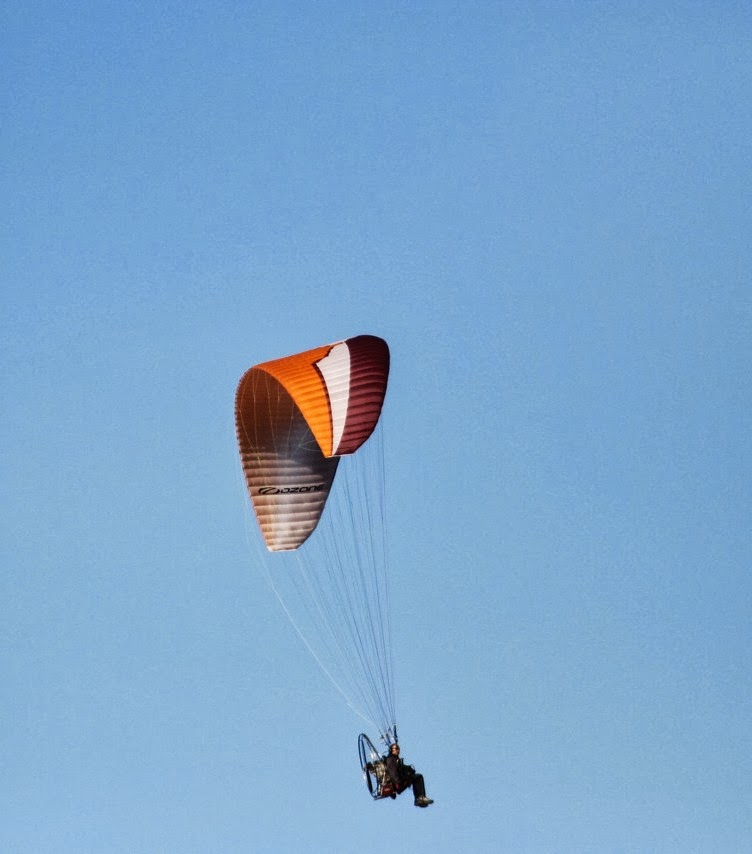
There was a "Moment of Chaos" on Saturday evening. Two paramotors flew dangerously low along the Point, disturbing hundreds of birds on the reserve. This unnecessary disturbance was frustrating, if it had occurred during the breeding season then there could have been catastrophic consequences. To prevent disturbance to sensitive wildlife, paramotors should not fly over Blakeney National Nature Reserve.
(Above photo by Graham Lubbock)

The two paramotors flying low over Blakeney Point

Among the walkers venturing up the Point this weekend was Penny Clarke, who took the above photographs. She also captured this splendid Reed Bunting at the Hood.

In other bird news, our recent coordinated wetland bird count across Blakeney Point and Harbour recorded an impressive total of 708 Redshanks.
 
Redshank in flight (Joe Cockram)

In these mild conditions, a few butterflies have been seen amongst the dunes: Small Copper, Small Tortoiseshell and Small White. We have now finished our weekly butterfly transects for the year. They run from April to September and the data is coordinated by the UK Butterfly Monitoring Scheme.


- Ajay, Coastal Ranger

Monday, 30 September 2013

30th of September: Young Rangers

Over the past few weeks, Academy Ranger George has been busy putting together a Young Ranger scheme for Blakeney NNR. Throughout this academic year, children from Blakeney and Langham Primary Schools will be doing a variety of conservation activities across the reserve and learning about its wildlife. They will then get a Young Ranger award at the end of the year.

The first activity was a litter pick on the Point and walk across the harbour. Thanks to both schools, the beach is looking much tidier.
 Children from Langham picking litter on Blakeney Point

Our friend and volunteer, Richard Porter, is currently in Iraq where he is involved in conservation work. Recently, he was also involved in a litter pick with primary school children. Along the edge of the Euphrates, there was a competition between schools as part of celebrations for the re-flooding of Iraq's Southern Marshes.
Children litter picking in Iraq (Richard Porter)

On Blakeney Point over the last few days a couple of rarities have turned up. As our followers on Twitter will know, yesterday a Bluethroat was found amongst the Suaeda on Far Point. This beautiful bird is the classic Blakeney Point rarity. Over the past two days, the bushes have been full of thrushes. It was quite magical seeing so many Song Thrushes in a small area. There were about 60 in the garden and 80 in the Plantation along with a few Redwings. Brent Geese have also been on the move, with several hundred flying over, and many feeding on the mudflats, their soft calls travelling across the harbour.

From Thursday to Friday, a Little Bunting was present on the Point. This attractive, small bird breeds in northeastern Europe and is a rare vagrant in Britain. This Gem moth is a rarity in Norfolk. It is an immigrant and there have only been a few records of it in the county.

Our latest seal count was conducted on Friday and recorded 886 Grey and 231 Common.

Suddenly September has disappeared and tomorrow it will be October. The nights are drawing in and a wonderful autumn feeling is present along the Norfolk Coast. Blackberries are abundant and sunrises and sunsets truly special...

- Ajay

Sunday, 22 September 2013

22nd of September: Return of the pink feet

Pink-footed Geese have arrived back in Norfolk to spend the winter with us after breeding in Iceland. As numbers build, soon the skies will resonate to their [wink-wink] calls and their v-shaped flying formations. Other winter visitors returning to the Point in the last few days include Peregrine Falcon, Merlin and also Snow and Lapland Buntings.

On Wednesday, Blakeney Point hosted the Little Tern Working Group end-of-season meeting. Where conservation bodies meet and collaborate on ways to protect this under-threat species as well as giving feedback on how the season fared at each site along the coast.

Today, Richard Porter photographed this colour-ringed Stonechat on Blakeney Point. It was ringed as a first summer male while breeding at Arnold's Marsh (a couple of miles east, near Salthouse) on the 12th of July last year. He was seen near the Cley beach car park several times over the winter and has now become our first Stonechat sighting of the autumn.

In this evening's warm weather there has been a hatch of small insects. This has resulted in hundreds of gulls coming to the main dunes to feed.

This weekend we said goodbye to Matt. We are very grateful for the work he has done this summer helping to protect and monitor the wildlife, and also for his photographs. He is returning to Essex where he is involved in a range of conservation work including volunteering for the RSPB. We wish him all the best for the future.

In other Norfolk Coast news, work is underway putting in gutters at Heigham Holmes to create feeding areas for wading birds.

Paul and Ajay
Photos: Victoria Egan, Richard Porter

Sunday, 15 September 2013

15th of September: Plants of the Point

This week saw the addition of the Blakeney Point Plant Atlas to our web-site. This wonderful piece of work is the result of many hours of plant studies carried out by Richard Porter between 1999 and 2012. He has catalogued all of the Point's plants, mapping their distribution and abundance. Richard has also spent much time travelling in the Middle East. He will be giving a talk at Cley Village Hall next week:

Travels in the Middle East
 Wildlife, history and culture
(Covering Iraq, Syria, Yemen, Socotra and Turkey)
Cley Village Hall, Wednesday 18th of September 7.30pm
Refreshments
Tickets £5 at door in aid of Cley Village Hall

On Saturday, 22 Little Egrets were seen in Blakeney Harbour. Small numbers are seen most days, but it is rare to see so many together in the harbour. The first time a Little Egret was seen on Blakeney Point was 24 years ago in 1989.
Little Egret in the harbour (Graham Lubbock)

On Wednesday the first Snow Buntings of the autumn were seen, these beautiful little birds can often be seen at Granborough Hill car park, Salthouse later in the year. On Thursday a juvenile Great Spotted Woodpecker was spotted in the Plantation. These are rare on the Point with less than 15 sightings. They are essentially a sedentary species and so ones on the Point are more than likely continental immigrants. It was a pleasure to see -and hear- as it hammered away on the Sycamore. Another unexpected find was a dead Storm Petrel on the beach.

Snow Bunting

Yet another unexpected sighting was made this morning. We flushed a Buzzard from the Suaeda on Far Point, where it had been feasting on a Redshank.

As I type, the wind outside is howling and the rain is hammering on the Lifeboat House windows. Before the weather closed in, we undertook a low tide seal count: 903 Grey and 205 Common. Grey Seal numbers are building and in the second half of October they will start to pup. During the pupping season there will be reduced access on the Point to reduce disturbance to pupping seals and danger to visitors.

In other news, I have just been appointed as the new permanent Coastal Ranger. I am delighted to be a permanent member of the Norfolk Coast National Trust family and look forward to working at Blakeney through the changing seasons.

- Ajay Tegala (Coastal Ranger)

Sunday, 8 September 2013

8th of September: Autumn in the air

Suddenly we're a week into September. There is a definite feeling of the beginnings of autumn on Blakeney Point. On Friday the first Robins of the autumn were seen. At the same time, summer doesn't seem to be completely over and the sun keeps on shining. The second brood of Swallows in the Tern Hide have just fledged and there are five chicks on the side of the Old Lifeboat House which are almost ready to leave the nest. Over the past few weeks Hobby sightings have been frequent.
Hobby (Joe Cockram)

Numbers of widlfowl are increasing in the harbour and lots of waders can be seen...
Sanderling (Joe Cockram)

There are still plenty of butterflies around, with Small Tortoiseshells being particularly numerous, along with Small Whites, Graylings and even the occasional Clouded Yellow.
Small Tortoiseshell (Joe Cockram)

There have been a few autumn migrants since we last blogged, mostly Whinchats, Wheatears and Willow Warblers (the three Ws) with a few Common and Lesser Whitethroats, Pied and Spotted Flycatchers, Common Redstarts and the occasional Sedge Warbler.
Wheatear (Joe Cockram)

The most notable bird sighting was the Western Bonelli's Warbler on Friday evening, as our Twitter followers will already know. This was seen and heard in a bramble bush east of Great Sandy Low and looked like it was going to spend the night there. Alas, the next morning there was no sign of it.

It is always worth looking out to sea. Occasionally Harbour Porpoises can be seen. Two were spotted from the Point on Friday.

- Ajay with thanks to Joe Cockram (Seasonal Ranger in 2010 and 2012) for his photographs

Monday, 26 August 2013

25th of August: Flippin' heck, another Wryneck

The birdwatchers' year on Blakeney Point is dominated by migration. To witness a large fall of migrants is a most rewarding experience for those who see it, this however is a rare event. This weekend a wide range and good numbers of birds were seen. The suaeda and brambles were literally dripping with birds. Through social media and rare bird reporting services, word spread and several visitors were able to enjoy a memorable visit to Blakeney Point.

Saturday saw a Booted Warbler, Icterine Warbler, 3 Wrynecks, 20 Pied Flycatchers and 3 Spotted Flycatchers, a good haul but nothing compared to the next day. On Sunday 15 Wrynecks were present - to see just one of these cryptic creatures will put a smile on most birders' faces for the day. Also seen were 3 Icterine Warblers, 10 Tree Pipits, 60 Common Redstarts, 15 Whinchats, 75 Willow Warblers, 60 Pied Flycatchers, 20 Spotted Flycatchers, 40 Wheatears, 3 Dotterels and a Common Rosefinch. A truly spectacular and memorable couple of days.

Wryneck (photographed by Richard Porter)

 Pied Flycatcher

 Common Redstart

 Spotted Flycatcher

Willow Warbler

Booted Warbler (photographed by Richard Porter)

Recent low tide seal counts include 520 Grey and 128 Common on the 23rd, 555 Grey and 232 Common on the 25th, and 598 Grey and 298 Common today.

Migrations was also evident among the butterflies, with three Clouded Yellows being seen in the last three days as well as Painted Ladies and Silver Y moths observed in good numbers.

Clouded Yellow (photographed by Richard Porter)

Now that the breeding bird season has ended, there is wider access on the Point and the dog restrictions have been lifted until next April. Please do keep dogs on leads however, as this limits disturbance to roosting birds on the beach at high tide.

- Paul and Ajay (with photos by Matt)